Friday, April 26, 2019

Ash vs Alien Files #1 - The Curse of Ripley


Ellen Ripley and the Xenomorph (ALIEN³)


Many franchises seem to be a divisive issue these days, you can't afford to have an opinion without someone wanting to tear your soul apart. Thankfully fans aren't Cenobites, so no blood loss or physical torment. Mentally and emotionally, however, can be quite draining if you let it. The problem arises from passion, we're all passionate about what we love. And franchises are deeply loved by fans. So much so that many can't accept changes to their movie or television series, or embrace something that doesn't fit in with established continuity. They want more of the same, or complain that it is too much the same and when given a radical shift from the norm they complain that it's too different, and want more of how it was before.

Being a director can be a thankless job these days.

I've been obsessed with the Alien franchise since the late eighties, having watched Aliens (1986) for the first time on VHS. It was a breathtaking ride of sci-fi and horror, with plenty of action and state-of-the-art special effects. I had not seen anything like it. The Xenomorph was the stuff of nightmares, as it had meant to be. We were introduced to Hadley's Hope, a small colony on the moon of Acheron (originally named LV-426) after it had fallen prey to the aliens. Ellen Ripley (played superbly by Sigourney Weaver) was persuaded to return to the moon where it had all began for her - in Alien (1979) she had first visited LV-426 with the crew of the commercial space tug USCSS Nostromo, a nightmarish mission that would later see the deaths of everyone except Ripley.

While on Acheron for the second time, Ripley encounters a young survivor, a girl named Rebecca Jorden, known to everyone except her brother as "Newt". They immediately form a bond. This is one of the parts that I like most about Aliens, and Carrie Henn's performance is outstanding. "My mommy always said there were no monsters - no real ones - but there are, aren't there?"

Following this viewing, it was inevitable that I would delve into Ridley Scott's original 1979 masterpiece sooner or later. Funnily enough, compared to the busyness of Aliens, its predecessor felt a little... bare. One alien, no weapons at the crew's disposal except for flame throwers. It was a fun experience, though not one I warmed to instantly. In truth, I had been spoiled by the sequel, and had to learn to accept Alien on its own merits. This I eventually succeeded in doing, and I now regard the first movie as one of the best in the franchise.

In 1992 came the third and final instalment in what I regard as Ellen Ripley's trilogy: Alien 3, directed by David Fincher. This is where fans are split in their support and admiration. Many people have felt that it was wrong, insulting even, to kill Newt and Captain Dwayne Hicks off screen, instead casting Ripley to a prison colony to face off against yet another single alien creature. Surely two of the most popular characters from Aliens deserved better? Well, as much as I adore Newt, for me the first three movies were always part of what I refer to as the 'Shakespearean tragedy of Ripley', for it was Warrant Officer Ellen Ripley who was destined to be haunted by this nightmare as her life unfolded beyond her control.

Her daughter, Amanda, was only 10-years-old when Ripley took a job that would ultimately lead her to LV-426 (Alien). First tragedy, the loss of the Nostromo crew; third tragedy, returning home to Earth 57 years later after her "lifeboat" the Narcissus was found drifting through space by a passing salvage vessel, and learning that Amanda had grown old and died (Aliens).

Notice I skipped something? If you are at all familiar with Alien: Out of the Shadows (the first in a published canonical Alien trilogy) you will know that Ripley had actually been awoken thirty-seven years after her Nostromo incident, by the crew of the DSMO Marion orbiting LV-178, also called New Galveston. They, too, are being plagued by Xenomorphs and the reality of their situation, Ripley discovers, is that the vessel will burn up in the planet's atmosphere. Their only hope: the Narcissus! To complicate matters, they must replace the shuttle's empty fuel cell by going down to LV-178 to obtain fuel from a mining colony. On the planet surface - why is it never easy? - they face further aliens. You might be wondering why Ellen Ripley never recalls this encounter in further movies? Well, read the book and find out. Her experiences on the Marion is the second tragedy.


The sacrifice of Ellen Ripley on Fiorina 161 (ALIEN³)


Fourth tragedy, the massacre of Hadley's Hope and the marines that accompany Ripley to the moon. Newt is Ripley's connection to the colony, as we learn that the girl's family was killed (you can learn more about the fall of Acheron in Christopher Golden's Alien: River of Pain novelisation). There is a beautiful mother-daughter relationship between the two, especially when you realise that they have both suffered loss. Though not a replacement for Amanda, could Newt become the child that Ripley needs? This finally leads to tragedy five and six: Newt's off-screen death and Ripley's sacrifice (Alien 3).

It is clear that our protagonist was never meant to meet a happy ending. Those that she loved were taken from her, hope quickly snatched at every turn. And all because of the alien...

Alien, Aliens and Alien 3 (and Alien: Out of the Shadows) combined tell the extraordinary tale of a curse. This becomes even more significant when you take into account Alien: Isolation, a story that explains Amanda Ripley's own encounter with the Xenoporph. And don't get me started on Alien: Sea of Sorrows, this is when things just get weird...

I've omitted Alien Resurrection as this movie features Ripley Clone 8, and not 'the' Ellen Ripley. This is a different story entirely and one that deserves its own article.

Maybe.


Saturday, September 12, 2015

FilmLight - Mental Illness Vs Hollywood


Article author: Alwyn Ash
"At the right time, in the right light, everything is extraordinary"


The Call Image


"I saw a man who had lost any sense of reality, a seriously ill individual whose crimes, though hideous, are also heartbreaking..."

In horror and thriller we are so used to villains being the monstrosities of the piece - some faceless, others grotesque. Just think Freddy Kruger from the Nightmare On Elm Street franchise, or Jason Vorhees's horrific killings on Friday 13th... It is easy to hate these phantoms of fear, as they hunt and massacre their prey. But what is evil, and how is it truly defined in film? How to evaluate a character whose actions are motivated by mental illness? Think of Norman Bates, a man whose mind is clearly burdened, the killings a product of his mental state. Is he considered to be evil? Just when does an audience feel sympathy for a psychopath, or at least touch upon some level of understanding?

Recently I stumbled upon "The Call", a 2013 movie starring Halle Barry as Jordan Turner, a 9-1-1 operator who blames herself for the murder of a distressed caller, witnessed in the first act of the movie. Six months passes and Turner finds herself in a similar situation when the original killer strikes again, kidnapping another young girl called Casey Welson (played by Abigail Breslin). This time the girl is able to phone from the boot of her kidnapper's car, leading to a tense but exciting scenario in which Turner attempts to locate the girl's whereabouts in a bid to help with the police search. Michael Foster (Michael Eklund), the man eventually named as her abductor, is violent, killing whoever stands in his way. But further into the story we learn of his own tale, one of incest and love, loss and devastation. The trigger for his crimes later on in life...

In the concluding act of the movie, and taking matters into her own hands, Turner manages to track the girl down in a cellar, facing Foster in a confrontation that ultimately leads to him being imprisoned in his own hideout, where he will rot, never to be discovered... This is where I found some sympathy for the villain, and the final scenes very distasteful.

It is ironic that, at the end of a terrifying ordeal in which a young girl is kidnapped and facing certain death, I find the final behavior of Turner and Welson to be far more monstrous than the actions of a mentally-disturbed man. Even if you contemplated Welson's to be temporary insanity due to her recent experience, just what is Turner's excuse? Revenge for the death of the previous victim? Accepted, Michael Foster's crimes cannot be overlooked, nor is there any reasonable justification for what he has done, and so life imprisonment in a psychiatric institution should have been the outcome. Realising their decision to let him die alone, Foster pleads with them for mercy, to which Turner says, "It's already done!" - echoing the killer's own words during two previous phone conversations between the two characters.

In scenes that show Foster's prop head and the many scalps taken from young woman, I saw a man who had lost any sense of reality, a seriously ill individual whose crimes, though hideous, are also heartbreaking. His sister died while he was a young boy, and ever since he has yearned for her to be back in his life. His fixation with resurrecting her is similar and yet different in ways to that of Norman Bates, whose split personality called for Norma Louise Bates' return in the "Psycho" films. In "The Call", Foster wishes nothing more than to be reunited with his dead sibling, killing girls until he locates blonde hair that precisely matches that of his sister's.

As someone who suffers with mental illness, I can understand the fine line that can be crossed when not in one's correct frame of mind. Though I am far from Foster's state, there have been times when my own actions have later surprised, horrified and disgusted me, whether it is self-inflicted injuries or other. I have felt just how easily one might go insane when handed circumstances that overwhelm. Just where does true madness lie? Repeating my earlier question, what is evil, and how is it truly defined, whether in film or reality? Foster is no Hollywood 'monster', nor does he fit the same profile as Charles Lee Ray ("Chucky") or 'Pinhead' ("Hellraiser").

When the beast is slain, we usually punch the air in satisfaction, praising the heroes for their bravery against the odds. I felt for Welson during her captivity, wished for her to be safe. I even appreciated Turner's frustration and guilt. But, in the end, they were both the monsters in my eyes - Judge & Jury, coldly deciding his fate without any thought as to his own state of mind. After all, why should they? He is the beast... isn't he?


Follow Alwyn Ash on Twitter: @AlwynAsh. Image source courtesy of Greg Gayne © 2013 SPWAG (via www.imdb.com). Article © Alwyn Ash 2015. Quotes (if applicable) used for publicity purposes only. No infringement of copyright is intended.


Monday, June 29, 2015

FilmLight - The Necessity of Originality


Article author: Alwyn Ash
"At the right time, in the right light, everything is extraordinary"


2001 Space Odyssey Image
2001... and there's absolutely nothing
to watch on the new Monolith TV?


In a regular column, Alwyn Ash shines a spotlight on different film-related subjects. This week it is the need for sequels, reboots and remakes...

This subject has likely been touched upon by other sites previously, but I simply cannot hold back on my own personal feelings presently regarding the film industry's lack of vision... No one is in any doubt that movies are all about profit, just like in other forms of entertainment. A product is created in order to be a financial success. In the case of Hollywood, any film that under-performs at the Box Office is unlikely to ever see a sequel green-lit for production. That is just the way of things! However, a question I raise is, "Have movie executives gone too far in relying on the familiar?" Just what does the future hold in store for cinematic experiences?

In a once golden age, Hollywood produced some wondrous theatre, original storytelling, visually breathtaking. Though my era of cinema truly evolved in the 1980s, I applaud the ingenuity of Byron Haskin's 1953 feast "The War of the Worlds" (with absolutely amazing designs of Martian war machines by Al Nozaki), the quite simply brilliant and effective morality of Robert Wise's 1951 spectacle "The Day the Earth Stood Still", and the out-of-this-world event of Fred M. Wilcox's 1956 masterpiece "Forbidden Planet". The 1950s produced so many features to praise that I would be here all day.

However, you name a decade and there are titles that immediately spring to mind: "Psycho" (1960), "The Dirty Dozen" (1967), "Grease" (1978), "Rocky" (1976), "Life of Brian" (1979), "Top Gun" (1986), and "Schindler's List" (1993). Whatever the era, you are certain to have your choice of films... One could give a hearty mention to George Lucas's "Star Wars"; or Franklin J. Schaffner's "Planet of the Apes", itself an adaptation of Pierre Boulle's 1963 novel "La Planète des Singes". When approached correctly, book-to-film adaptations can make for captivating additions: never forget that the ground-breaking special effects giant "Jurassic Park" was a novel first, by American writer Michael Crichton; and James Bond's literary assignments such as "Casino Royale" would spawn a movie franchise - "When I wrote the first one in 1953, I wanted Bond to be an extremely dull, uninteresting man to whom things happened; I wanted him to be a blunt instrument... when I was casting around for a name for my protagonist I thought by God, (James Bond) is the dullest name I ever heard" - Ian Fleming, The New Yorker, 21 April 1962

One of my pet hates right now are the seemingly endless stream of remakes and sequels that Hollywood is so obsessed with. Though everyone has an opinion regarding the best of these, I cannot help but take a dislike to Marvel and DC Comics transfers to the Big Screen. Please DO NOT misunderstand, I simply ADORE Tim Burton's 1989 re-imagining of "Batman"; and Christopher Reeve's performance in the "Superman" franchise (perhaps NOT "Superman IV") touched my childhood with such magic and fascination. But how many times must there be a reboot, or a clash of titans just because it seems like a good idea?

In my opinion there just aren't too many surprises in cinema now. When there are, it is a wondrous event. In the good old days remakes were produced sparingly, with much screen time devoted to new and experimental movies. Arthur C Clark's "2001: A Space Odyssey" was a masterpiece of cinematic art; and Tron's visual style a unique blend that gave access to a digitalised universe unlike any other. Directors such as Stanley Kubrick and Steven Lisberger knew how to craft the unusual. They were masters of vision.

Have we now also reached a time when merchandise determines what is to be filmed and commercially released, with the extra revenue firmly in the minds of studio bosses? Though a financial necessity in some ways, are we in danger of losing original and singularly entertaining motion pictures? This is where I value independent film companies and their movie directors, whose single aim is to create something that tells a story, well-written and passionately produced. Because of their limited budgets, everything is crafted with care, each scene made to count.

I am now off to watch "Close Encounters of the Third Kind: The Return", at the theatre. Apparently the aliens forgot to leave one of their abductees behind in the previous instalment, and Columbia Pictures felt it reason enough for a sequel... Expect burning eyes and a crystal skull... Sorry, already done? Thank goodness for Alfonso Cuarón's "Gravity", Caradog W. James's "The Machine", and Alex Garland's "Ex Machina".


Follow Alwyn Ash on Twitter: @AlwynAsh. Image source courtesy of Metro-Goldwyn-Mayer. Article © Alwyn Ash 2015. Quotes (if applicable) used for publicity purposes only; no infringement of copyright is intended.

Friday, June 19, 2015

Women of Hollywood - Sigourney Weaver - From Alien To Rwanda


Article author: Alwyn Ash
"At the right time, in the right light, everything is extraordinary"


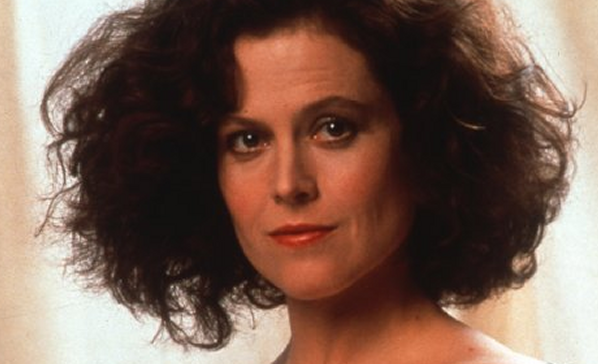
Sigourney Weaver Image


In this series of articles, Alwyn Ash takes a look at some of the most inspirational ladies to rise from Hollywood's light...

Born Susan Alexandra Weaver on 8th October, 1949, American actress Sigourney Weaver has won the hearts and respect of fans and fellow artists around the world, starring in movies to die for and becoming a positive role model for young women. 1979 was a particularly interesting year: the Music for UNICEF Concert took place in January, raising money for charity; the Albert Einstein Memorial, a bronze statue of the famous German-born physicist, was unveiled at The National Academy of Sciences, USA; and the first ever Star Trek feature film was released in theatres. But perhaps one of the most fascinating events to emerge was this unknown "little" movie called Alien.

Directed by Ridley Scott, the story of a sinister acid-for-blood creature at liberty aboard a spacecraft, killing its crew, turned one of its characters into a cinematic icon. Weaver played Warrant Officer Ellen Ripley, protagonist of what would eventually become a film series. In contrast to blockbusters of the time including Mad Max, Rocky 2, and James Bond: Moonraker, Scott's sci-fi horror gave us a woman who survives a hellish nightmare even when the rest of her shipmates are killed. Ripley is strong-willed and intelligent, her instinct for self preservation equal to that of any Xenomorph! And Weaver was perfectly cast. Relatively unknown, the Manhattan-born actress had only appeared in a minor role in a Woody Allen film before auditioning for a part in the 1979 feature.

American film critic Ty Burr once said, "One of the real pleasures of 'Alien' is to watch the emergence of both Ellen Ripley as a character and Sigourney Weaver as a star".

For over three decades Weaver has worked tirelessly, featuring in everything from Ghostbusters (1984), Copycat (1995), and Red Lights (2012) to Ghostbusters 2 (1989) and Galaxy Quest (1999). Her career has brought her back to some familiar places, and back to working with old faces such as director James Cameron. In 1988 she helped bring to our attention the terrible practises that resulted in poaching and brutality inflicted on mountain gorillas, in the beautifully-produced Gorillas In The Mist, directed by Michael Apted and filmed on location in Rwanda. The work undertaken by primatologist Dian Fossey (who was viciously murdered in 1985 while camping in the Virunga Mountains) was inspirational, and Weaver's performance simply award-winning; she returned 20 years later for a documentary further examining Fossey's work and the gorillas that had become so important.

In 2006, Weaver said of her diverse work, "Certain roles demand stepping out of one's comfort zone, maybe every role demands it". A passionate environmentalist, the actress became honorary chairwoman of The Dian Fossey Gorilla Fund, whose goal is the "conservation and protection of gorillas and their habitats in Africa".

Trickle Up, a programme founded in 1979 with the mission of empowering people living in poverty, had its 2008 annual gala hosted by Weaver. "More than 90% of Trickle Up participants are women, both because women’s access to capital is often restricted due to social and cultural constraints and because they consistently direct economic resources toward household needs. Trickle Up provides a pathway toward economic and social empowerment, helping participants build financial independence, gain self-confidence, and take on larger roles in their households and communities."

Sigourney Weaver is seen as independent and strong; a powerful representative of both Hollywood and women's rights. She clearly possesses passion, and empathy for the well-being of others. If the inspiration for Women of Hollywood has been a rise in feminism, of which I am a supporter, then who better an ambassador than a woman who has portrayed the independent and memorable? When talking about Ellen Ripley's creation, she has this to say, "I don't think the producers were feminists. In the original script, they were all men. I think they thought, 'let's change it up and make the survivor a woman because no one will ever think the survivor will be a woman'".


Image source courtesy of imdb.com. Article © Alwyn Ash 2015. Quotes (if applicable) used for publicity purposes only; no infringement of copyright is intended.

Sunday, May 24, 2015

FilmLight - Why Ghostbusters For New Generation? An Expanded Universe


Article author: Alwyn Ash
"At the right time, in the right light, everything is extraordinary"


Ghostbusters Image


Lately there has been much discussion - and argument - relating to the announcement of brand new Ghostbusters movies. For many years most of the original team who gave us the 1984 supernatural hit had tried to revive the franchise with a second sequel - Ghostbusters 2 isn't to everyone's liking, so it kind of felt like unfinished business, perhaps? Ghostbusters 3 could have satisfied existing fans while gaining a new, younger audience. However, instead of the straight forward route, we are now faced with something slightly different: the potential for a Ghostbusters "universe". Or, as some people see it, a battle of the sexes!

Director Paul Feig, whose only cinematic hit may be 2011's Bridesmaids, will work with writer Katie Dippold in reimagining one of the greatest sci-fi and fantasy film franchises of all time; already cast for this venture are Kristen Wiig, Melissa McCarthy, Leslie Jones and Kate McKinnon. However, it looks like a second movie will be produced, focusing on a more "traditional" approach, whatever that means. To be written by British-born Drew Pearce, this other Ghostbusters is thought to have been conceived due to a negative tide of comments directed at both Feig and the whole idea of a female-centric movie. Whether this is true or not, it is a welcome idea to expand the franchise in multiple directions...

Sony has set up Ghost Corps, a company with a vision to do just that! And it will have people like Ivan Reitman and Dan Aykroyd on board to see that every possible angle is covered. Just think, in addition to new movies there could be a television series, an official line of novels, and a toy range that won't just be available for a collector's market.

An argument for embracing this new approach? Is it such a negative thing to have a much broader universe for Ghostbusters to explore? Agreed, there are so many movies that should never be touched, remade or given a genesis storyline. But, as proven with The Real Ghostbusters, a spin-off cartoon series that ran from 1986 to 1991, there is much fun to be had from allowing much flexibility to a world that Aykroyd and Harold Ramis made real with the release of the 1984 film.

For those who didn't enjoy Ghostbusters 2, a motion picture that manifested after pressure from the studio to repeat the success of its predecessor, it could be that the official sequel just wasn't seen to take any great steps from its first outing, disregarding the outcome of Ghostbusters entirely by resetting the bar at a low: they saved New York - hell, the world! - and what thanks do they get?

Exploring just what their team - or a network of teams - could have accomplished if given adequate funding and support might have been a blockbuster of an idea. Instead, fans were left with a long wait as scripts were written, rejected, rewritten, and talks held regarding a possible comeback, only for certain parties to make it clear that they were unlikely to return... and, Harold Ramis' death in 2014 came as a shock to fans, closing the doors to any possible sequel featuring all four Ghostbusters for good.

For a franchise that is now over thirty years old, toys, comics and video games have fared well. Sadly, the only novels that exist (unless you count a few published by Knight Books for The Real Ghostbusters) are adaptations of the films, though they seriously need a reprint; author Larry Milne wrote for the first, while Ed Naha adapted the sequel. More is needed. It is not about saturating the market, but giving fans old and new an opportunity to experience an expanded universe.

Back in March 2015, Pearce tweeted, "Don't worry, the tone we're aiming for is pretty 'human-centric'. Except for all the ghosts". Whatever Sony has planned for the future, let us hope that the 2016 reboot (Feig) succeeds. If only Kenner Products was still around to reproduce the original wave of Real Ghostbusters figures..


Image source courtesy of ghostbusters.com. Article © Alwyn Ash 2015. Quotes (if applicable) used for publicity purposes only; no infringement of copyright is intended.